
Introduction
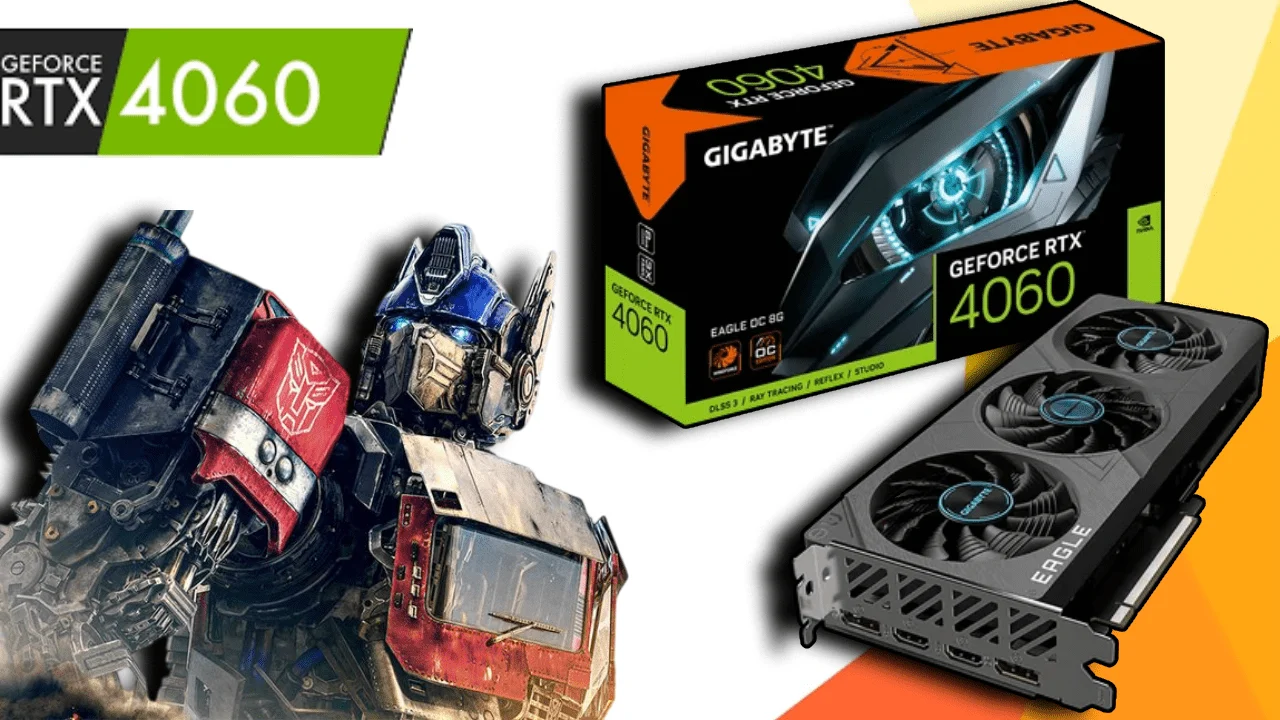
The Nvidia GeForce RTX 4060, launched in June 2023, remains a popular choice for budget-conscious PC gamers in 2025. Priced at an MSRP of $299, it targets 1080p gaming with strong performance, leveraging Nvidia’s Ada Lovelace architecture and DLSS 3 technology. Despite criticism over its 8GB VRAM and modest generational gains, its efficiency and affordability have made it the third most-used GPU in the April 2025 Steam Hardware Survey. This article evaluates the RTX 4060’s performance, features, and value in 2025, drawing on recent reviews and user feedback.
Specifications and Features
The RTX 4060 is built on the AD107 GPU core, featuring 3,072 CUDA cores, 96 texture-mapping units, and 24 ray-tracing cores. It comes with 8GB of GDDR6 VRAM on a 128-bit memory bus, delivering 272 GB/s bandwidth at 17 Gbps. The card has a base clock speed of 1,830 MHz, boosting up to 2,460 MHz, with some overclocked models like the ASUS ROG Strix reaching 2,700 MHz. Its total graphics power (TGP) is a modest 115W, requiring only a single 8-pin PCIe power connector and a 300W PSU, making it ideal for compact or budget builds.
Key features include:
- DLSS 3 with Frame Generation: Enhances frame rates in supported games, significantly boosting performance.
- AV1 Encoding: Offers superior video encoding efficiency compared to older NVENC generations, ideal for streamers.
- Power Efficiency: Consumes 111–126W under load, a significant improvement over the RTX 3060’s 170W.
However, the card lacks DisplayPort 2.1, limiting its appeal for future-proofing high-refresh-rate 4K/8K displays.
Performance in 2025
The RTX 4060 is designed for 1080p gaming at ultra settings, consistently delivering 60+ fps in most modern titles. Testing by PC Guide in 2025 showed strong native performance in games like Cyberpunk 2077 (65 fps), Assassin’s Creed Valhalla (70 fps), and Rainbow Six Siege (140 fps) at 1080p ultra settings without DLSS. Esports titles like Valorant and CS2 easily exceed 120 fps. At 1440p, performance varies, averaging 40–60 fps in demanding games, often requiring lowered settings or DLSS to maintain smooth frame rates.
With DLSS 3 and Frame Generation enabled, performance improves significantly. For example, a Reddit user reported 90–120 fps in Avowed and 80–90 fps in Baldur’s Gate 3 at 1440p with DLSS Quality and Frame Generation, describing the visuals as “crisp and clear.” However, some games, like Indiana Jones and the Great Circle and Warhammer 40K: Space Marine 2, encounter VRAM limitations, resulting in memory errors or texture pop-in at ultra settings.
Ray tracing performance is decent but not exceptional. In Cyberpunk 2077 with Psycho RT effects, the RTX 4060 drops to 20 fps at 1080p, compared to 5 fps on the AMD RX 7600, showcasing Nvidia’s superior RT cores. However, enabling DLSS is often necessary to make ray-traced games playable.
Strengths
- Power Efficiency: The RTX 4060’s 115W TGP and low operating temperatures (69–74°C under load) make it a standout for small form factor PCs and energy-conscious users. It saves approximately $132 over four years compared to the RTX 3060, assuming 20 hours of weekly gaming in high-energy-cost regions like Germany.
- DLSS 3 and Frame Generation: These technologies provide significant performance uplifts, making the RTX 4060 competitive in modern titles.
- Affordability: At $299 (with some models like the Zotac Twin Edge as low as $290), it’s among the best sub-$300 GPUs, offering better value than the RTX 4060 Ti ($399) for 1080p gamers.
- Compact Design: Models like the Zotac Solo (163 mm long) are perfect for mini-ITX builds.
Weaknesses
- 8GB VRAM Limitation: The 8GB frame buffer is increasingly inadequate for 2025’s demanding titles, especially at 1440p or with high-resolution textures. Games like Indiana Jones and the Great Circle fail to load ultra presets due to VRAM constraints.
- Modest Generational Gains: The RTX 4060 is only 15–20% faster than the RTX 3060 at 1080p, falling short of the RTX 3060 Ti’s performance. Critics argue it aligns more with a hypothetical RTX 4050.
- VRAM Criticism: The 8GB VRAM and 128-bit memory bus have drawn significant backlash, with reviewers noting it’s insufficient for future-proofing, especially as 1440p gaming grows.
- Limited 1440p Performance: While capable at 1440p with tweaks, it struggles in demanding titles without DLSS, making the RTX 4060 Ti or RTX 4070 better for QHD gaming.
Comparison to Competitors
- AMD Radeon RX 7600 ($269): Offers similar 1080p performance but lags in ray tracing and lacks DLSS 3. It consumes more power (161–163W) but has a slight edge in value for non-RT gaming.
- Intel Arc B580 ($279): A new contender in 2025, it outperforms the RTX 4060 in some titles due to 12GB VRAM but lacks Nvidia’s software ecosystem and driver stability.
- RTX 5060 ($299, launched May 2025): With 25% more cores, GDDR7 memory (448 GB/s bandwidth), and DLSS 4, it’s 17–25% faster than the RTX 4060 in games like Doom: The Dark Ages (73 fps vs. 60 fps). However, it retains 8GB VRAM, limiting its appeal.
User and Reviewer Sentiment
The RTX 4060 has polarized opinions. Positive reviews, like those from TechRadar and PC Guide, praise its efficiency and 1080p performance, with Amazon ratings for models like the Zotac Twin Edge (4.5 stars) and Gigabyte Gaming OC (4.7 stars) reflecting user satisfaction for ease of installation and cooling. A Reddit user called it a “BEAST” for delivering 80–120 fps in 2025 titles at 1440p with DLSS, purchased for $388.
Conversely, critics like TechSpot argue it’s overpriced for its specs, resembling a $150–$200 GPU due to its lightweight design and limited VRAM. Some X posts highlight occasional performance drops to 20 fps in VRAM-heavy scenarios, potentially due to Denuvo or insufficient memory.
Should You Buy in 2025?
The RTX 4060 remains a solid choice for:
- Budget 1080p Gamers: It delivers 60+ fps in most titles at ultra settings, enhanced by DLSS 3.
- Small Form Factor Builds: Its low power draw and compact size suit mini-ITX systems.
- Streamers: AV1 encoding improves streaming quality with lower bandwidth.
However, consider alternatives if:
- You Game at 1440p or Higher: The RTX 4060 Ti or RTX 4070 offer better performance for $100–$200 more.
- You Want Future-Proofing: The 8GB VRAM may struggle with upcoming titles. The RTX 5060 Ti 16GB ($429) or RX 7700 XT (12GB) are more future-proof.
- You Own a Recent Mid-Range GPU: Upgrading from an RTX 3060 or RX 6700 XT yields minimal gains.
Conclusion
In 2025, the Nvidia GeForce RTX 4060 is a reliable, power-efficient GPU for 1080p gaming, bolstered by DLSS 3 and Frame Generation. Its $299 price point and compact design make it attractive for budget builds, but the 8GB VRAM and modest generational improvements limit its longevity, especially with the RTX 5060’s arrival. For 1080p gamers on a budget, it’s a strong contender, but those eyeing 1440p or future-proofing should consider higher-tier options or wait for RTX 50-series discounts.